
A Torn Calf, A Year of Rehab, and What I Learned Along the Way
This past summer I experienced my first significant muscle tear. The injury was a grade 2 strain of my medial gastrocnemius muscle, along with a partial tear in my plantaris muscle tendon. Basically, I pulled my calf muscle pretty good and picked up a bonus injury known as "tennis knee" in the process.
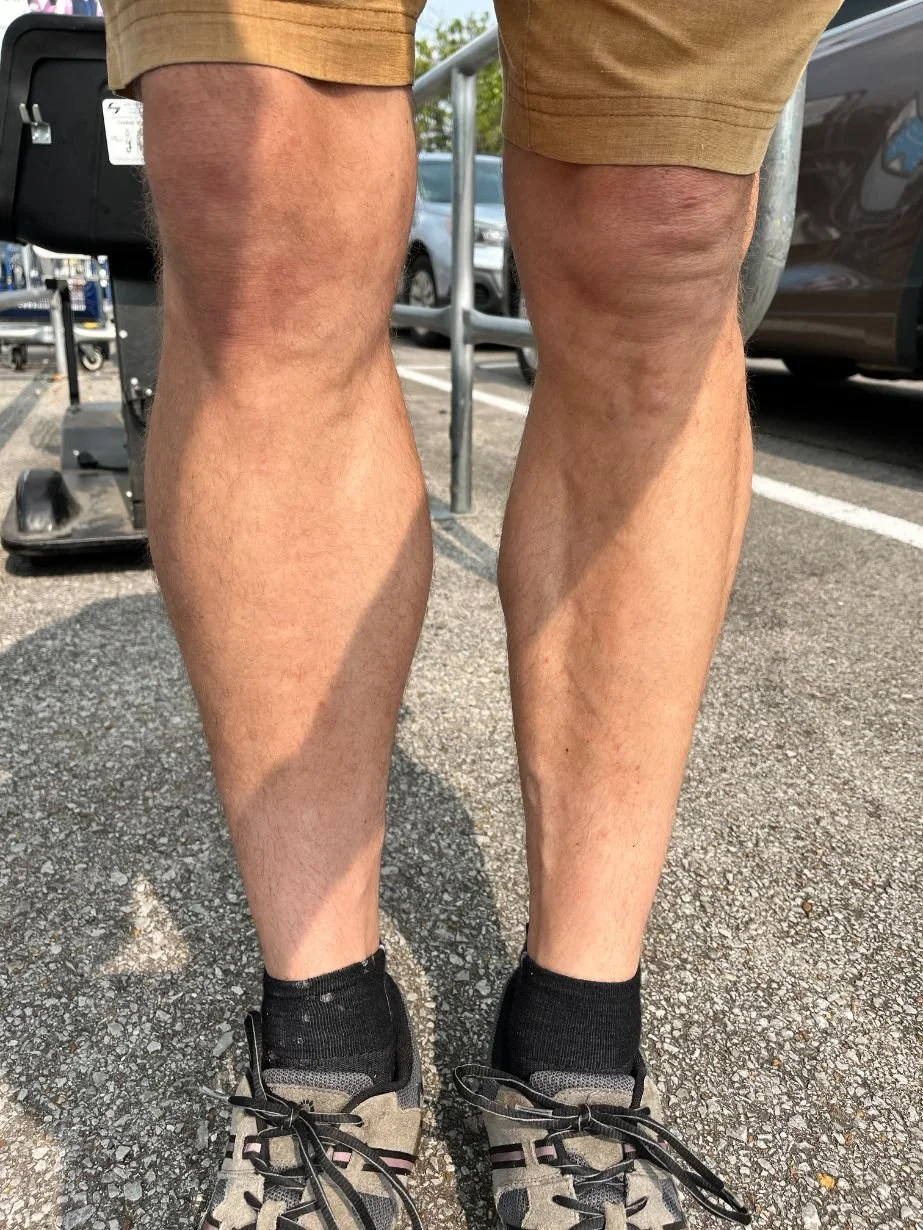
How it happened
I was playing tennis when I suddenly felt like I'd been struck hard in the calf by a tennis ball. In the moment, I assumed the impact had caused my calf to cramp, so I stepped away from my tennis buddies to go stretch it out. It was then that I realized I wasn’t just cramping. By the next day, my leg had swelled to double its normal size and stayed swollen for over a month. I couldn't put weight on it for a couple of weeks and was very ginger for a month after that. I even allowed myself to be subjected to a walking boot for some of the time (probably should have been in one full time—I’m a bad patient).
The rehab
Over the following months, I worked through a combination of treatments and outsourced some help from some of my buddies:
Cold laser therapy
Peptides
Dry needling
Myofascial release from our own all-star LMTs, Will Kelly and Justin Scott
Lymphatic massage from Gillian Rogers (Rousso Adams)
Chiropractic adjustments from John Palmer (Archetype Health) and Helena Benediktsdottir (Northern Lights Chiropractic)
Help with rehab programming from Madison Ohlman (Nova PT)
A year later, after a couple of minor setbacks along the way, I am 90% better. I'm pain free, but still working on rebuilding full strength and mobility. This was a good lesson for me about how the body adapts and heals, and that sometimes you need a little help from your friends.
What dry needling is actually doing
Included below are a couple of videos I took of one of my DIY dry needling sessions. Dry needling works by creating a micro injury in a tight band of muscle that invokes changes in the muscle tissue. These changes include the recruitment of healing cells into the area, which speeds recovery, it also quite often causes a "twitch response" to occur, which eventually leads to relaxation of the muscle. These videos show some pretty cool twitching in my medial and lateral gastrocnemius muscle bellies. Enjoy!
-Dr. Ray
